sábado, 23 de mayo de 2009

Anthology

List Poem
The top ten of my life
Relyable family;
kind mother;
strict father;
naughty brother;
attached sister.
Exciting love;
affectionate boyfriend;
hard work career;
precious health;
deserved enjoyment.
by Maricel Bamonde

Anthology

TO THE QUEEN OF HUNGARY


by: Voltaire (François Marie Arouet, 1694-1778)


PRINCESS, descended from that noble race
Which still in danger held the imperial throne,
Who human nature and thy sex dost grace,
Whose virtues even thy foes are forced to own.

The generous French, as fierce as they're polite,
Who to true glory constantly aspire;
Whilst obstinately they against thee fight,
Thy virtue and great qualities admire.

The French and Germans leagued by wondrous ties,
Make Christendom one dismal scene of woe;
And from their friendship greater ills arise,
Than e'er did from their longest quarrels flow.

Thus from the equator and the frozen pole,
The impetuous winds drive on with headlong force
Two clouds, which as they on each other roll,
Forth from their sable skirts the thunder force.

Do virtuous kings such ruin then ordain?
A calm they promise, but excite a storm:
Felicity we hope for from their reign,
Whilst they with slaughter dire the earth deform.

Oh! Fleury, wise and venerable sage,
Whom good ne'er dazzles, danger ne'er alarms;
Who dost exceed the ancient Nestor's age:
Must Europe never cease to be in arms?

Would thou couldst hold with prudent, steady hand,
Europa's balance, shut up Janus' shrine;
Make feuds and discords cease at thy command,
And bring from heaven Astrea, maid divine.

Would France's treasures were dispersed no more,
But prudently within the realm applied;
Opulence to our cities to restore,
And make them flourishing on every side.

You arts from heaven, and from the muses sprung,
Whom Louis brought triumphant into France;
Too long your hands are idle, lyres unstrung,
'Tis time to start from so profound a trance.

Your labors are of lasting glory sure,
Whilst warlike pomps, the triumphs of a day,
Blaze for a moment, never long endure,
But soon like fleeting shadows pass away.


This English translation by William F. Fleming of 'To the Queen of Hungary' is reprinted from The Works of Voltaire, Volume XXXVI. Trans. William F. Fleming. New York: E.R. DuMONT, 1901.

Anthology


Love Is A Great Thing
From Immortal Poetry


Love is a great thing, yea, a great and thorough good.By itself it makes that which is heavy light;and it bears evenly all that is uneven.It carries a burden which is no burden;it will not be kept back by anything low and mean;It desires to be free from all wordly affections,and not to be entangled by any outward prosperity,or by any adversity subdued.Love feels no burden, thinks nothing of trouble,attempts what is above its strength,pleads no excuse of impossibility.It is therefore able to undertake all things,and it completes many things and warrants them to take effect,where he who does not love would faint and lie down.Though weary, it is not tired;though pressed it is not straightened;though alarmed, it is not confounded;but as a living flame it forces itself upwards and securely passes through all.Love is active and sincere, courageous, patient, faithful, prudent, and manly.
by
Thomas à Kempis.


Thomas à Kempis (Thomas Hemerken, Thomas Hämerken, Thomas van Kempen) (1380 - July 25, 1471) was a Renaissance Roman Catholic monk and author of Imitation of Christ, one of the best known Christian books on devotion.

lunes, 11 de mayo de 2009

The Curse


by Arthur C. Clarke

"Good frend for lesvs sake forbeare,
To digg the dvst encloased heare
Blest be ye man yt spares thes stones,
And cryst be he yt moves my bones."


"Let him not to rest in peace," because we need Shakespeare. His death means devastation for the author; war, end of Literature. Although the author thinks Shakespeare is dead, he has not died really as he remains in his Literature. Authors take some ideas from him and it is not bad because they will remember him forever.


In the text "The Curse", Arthur C. Clark talks about science fiction and represents it with different colours and metaphors: "Often that appointment had been kept, high above the Earth where the sky was black and sun and stars shared the heavens together." In this extract, he shows that day and night are similar in war, and uses the colour black to symbolize his feelings towards war.

martes, 28 de abril de 2009

Starry night

Starry, starry night.
Paint your palette blue and grey,
Look out on a summer's day,
With eyes that know the darkness in my soul.
Shadows on the hills,
Sketch the trees and the daffodils,
Catch the breeze and the winter chills,
In colors on the snowy linen land.

Now I understand what you tried to say to me,
How you suffered for your sanity,
How you tried to set them free.
They would not listen, they did not know how.
Perhaps they'll listen now.


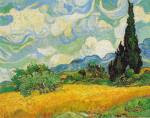
This poem "Starry night" and the video which shows all his paintings, reflects what happened to Vincent Van Goh when he painted. Generally, he based his works in painting people working in the countryside, eating, drinking, sleeping. Trees with or without foliage, flowers like the daffodils, empty halls, landscapes at night where we can see stars being reflect on the lake.

It is a sample of Vincent´s feelings about his life. He made all his paintings absolutely colourful, but not because he was happy. He was depressed, instead.

In conclusion, we can use words or drawings and colours to express our feelings and emotions in any particular moment of our life.

Tales in the sand

Dream Lord, lovely God,
dark water turns light,
love reaches heart,
no matter the says of a bird.

Utopial love, illusion dreamed,

whoever person can be,
man of bone and blood ,
easier to achieve.


lunes, 27 de abril de 2009

Claudia Ferradas´ magnificent conference

Claudia Ferradas is a teacher educational who travels around the world delivering conferences.

In the Cardiff closing plenary session, she talked about different themes such as identity of construction and negotiation, selection of material, intertextuality, indeterminancy and hypotext.

She explained that she is a teacher of literature so when she visited the UK she could say something about Shakespeare but she found it difficult to explain how to drink "mate".

Claudia proposed the use of intercultural approach in the classroom to develop personality and sense of identity.

As regards intertextuality, she showed photos of cafes in Buenos Aires where foreign tourist go. Then she sang " Cafetín de Buenos Aires" and related it with the students who are outside looking in, a great metaphor to caracterize the students who have no possibility of receiving education. She analysed this tango as a text exploring values, gender roles, ownership.

According to Claudia, there are gaps of indeterminancy to be filled; for instance, the necessity of explaining who is Gardel to foreign people.

In conclusion, the conference was absolutely amazing, entertaining and interesting. The way Claudia teaches language with an intercultural selection of material.